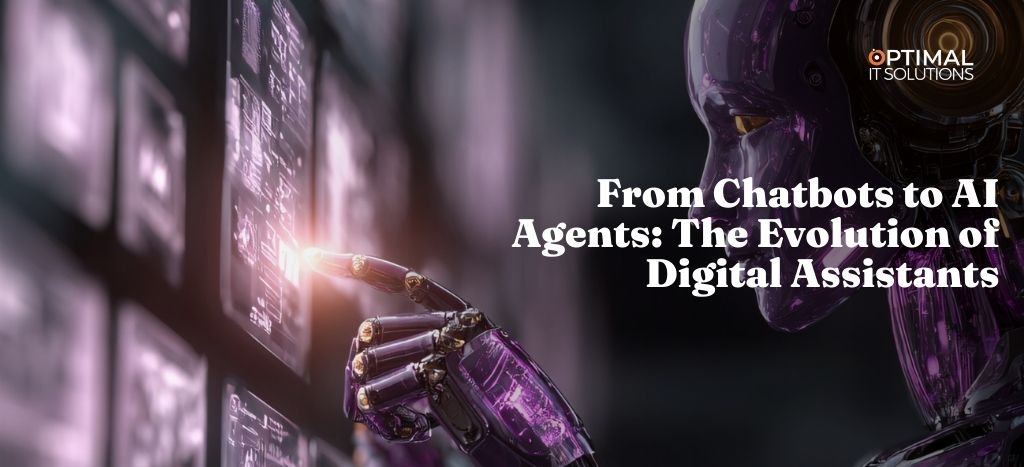
From Chatbots to AI Agents: The Evolution of Digital Assistants

Featured Posts


Technology has always been about making life easier, and one of the clearest examples of this progress can be seen in the evolution of digital assistants. People were impressed when a simple chatbot could answer a basic question or guide them through a menu of options a decade ago. Now in today’s world, we have AI agents that answer questions and also understand the context, learn from interactions, and take proactive actions.
This shift is more than just a technical upgrade. It represents a new era in how businesses connect with customers and how users experience digital services. Let’s see how digital assistants have transformed, what makes AI agents different from traditional chatbots, and more.
The Evolution of Digital Assistants
The story of digital assistants started with rule-based chatbots. These early systems were basically programmed scripts. A customer would type in a question, and the bot would check for keywords, then reply with a preloaded answer. It worked fine for basic scenarios, like checking account balances or answering What’s your return policy? But the moment someone asked something unexpected, the chatbot used to fail.
Natural language processing (NLP) and machine learning (ML) have brought major improvements over the years. Instead of responding like a rigid script, assistants could now process language in a way that seemed closer to human conversation. Voice assistants like Siri, Alexa, and Google Assistant showed people what was possible. But still, even these tools felt limited as they could tell you the weather or set a reminder, but they did not work well with complex contexts or multiple tasks.
That’s where AI agents come in. They are designed to respond and also to understand intention, learn patterns, and operate independently. This transformation makes the evolution of digital assistants so important because it’s no longer about answering questions, but about delivering real solutions.
Difference Between Chatbots and AI Agents
The debate of chatbots vs AI agents has become common, as more businesses try to figure out which one best suits their needs. Their capabilities and techniques are totally different, even though both of them are digital assistants.
Chatbots:
- Rule-based and reactive.
- Works well for simple and repetitive tasks.
- Little understanding of context.
- Examples: Answering FAQs, booking a table, or providing order status.
AI Agents:
- Proactive and awareness of context.
- Can learn from past conversations.
- Handle difficult and multi-step tasks.
- Adjust to customer behavior and personalize responses.
- Examples: Troubleshooting tech problems, organizing schedules, or making personalized product recommendations.
It’s like having a chatbot who is like a receptionist and hands you a brochure with answers, and an AI agent is like a personal assistant who knows your schedule, preferences, and helps you plan for the future.
How AI Agents Are Replacing Chatbots
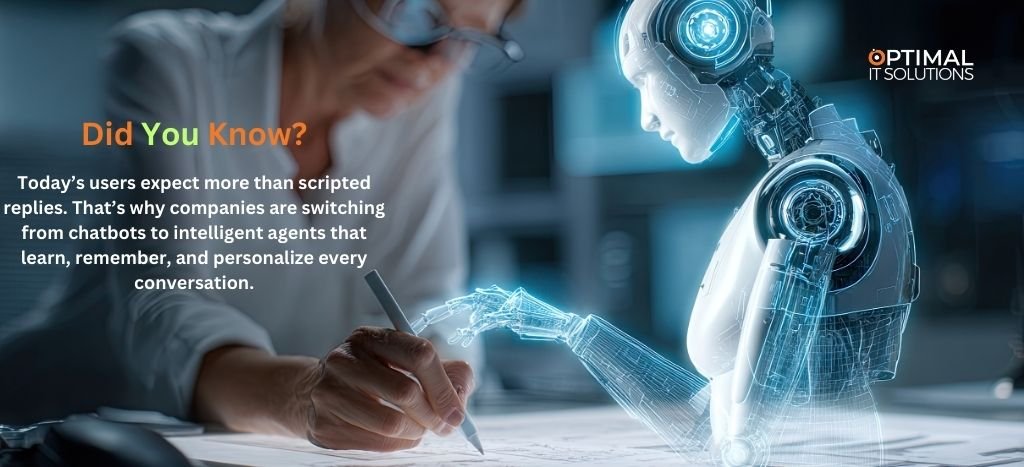
Businesses are now realizing the limitations of chatbots. Customers today expect conversations that feel natural, not scripted. They want digital assistants that can do more than answer yes-or-no questions. This is why many companies are moving from simple bots to AI agents.
Here is what an artificial intelligence agent can do in e-commerce instead of just showing a customer the tracking status of their package:
- Understand the haste of delivery.
- Suggest alternative solutions if an order is delayed.
- Provide custom product suggestions based on browsing history.
In customer support, a chatbot may transfer you to a human agent after a few failed attempts, but an AI agent can fix the problem itself by accessing multiple databases, processing the customer’s goal, and giving solutions without escalating.
This ability to replace reactive chatbots with proactive agents is changing how brands build loyalty. Customers no longer feel that they are talking to a machine. They feel understood and valued.
Benefits of AI Agents for Businesses
1. Improved Customer Experience
2. Reduced Costs
Instead of hiring more support staff for customer support, businesses can rely on AI agents to handle a notable part of interactions. This reduces overhead and keeps service levels high.
3. Efficiency and Scalability
4. Data-Driven Insights
5. Competitive Advantage
Industries are becoming more competitive, and offering fast and personalized service isn’t a luxury, but a necessity. Early adopters of AI agents usually see a stronger competitive edge compared to those still using chatbots.
Stop Using Outdated Chatbots — Discover AI Agents That Do the Work for You
How AI Agents Are Changing the Future of Work
The rise of AI agents is reshaping customer experiences and redefining workplace roles. Employees can now focus on high-value work like strategy, creativity, and building relationships instead of performing the same task again and again.
For example, in the healthcare industry, an AI agent can manage appointment scheduling, process insurance claims, and answer patient inquiries. This frees doctors and nurses so they can spend more time with their patients. In retail, AI-powered assistants can manage supply chains and predict customer demand, so that staff can focus on improving store experiences.
Businesses that are using AI agents are saving money and authorizing people to work wisely.
Challenges and Considerations
AI agents come with their own set of challenges. Businesses need to think about data privacy, ethical AI use, and the risk of depending on automation. Human oversight and transparency remain important. Customers want flawless and speedy services, but they also want the option to connect with a real human when needed. It’s important to balance automation with empathy if businesses want to be successful.
Conclusion
The evolution of digital assistants is honestly plausible. It all started with simple chatbots with limited capabilities, which have now transformed into intelligent AI agents that can understand, analyze, and act in meaningful ways. This shift is all about creating better, more human-centered experiences in the digital world.
At Optimal IT Solutions, we strongly believe that the smart use of technology is essential. Relying too heavily on digital agents or misusing them can create serious challenges, which is why responsible adoption matters just as much as innovation.
As these AI agents continue to improve, they will undoubtedly support businesses, enhance productivity, and reshape the way people interact with technology and Optimal IT Solutions is committed to helping businesses adapt and grow within this new era.
FAQ's
Chatbots are used to handle simple tasks, while AI agents can understand, learn, and manage complex interactions.
Founded in 2018, TekRevol is a trusted tech company delivering ISO 27001-certified digital solutions
Technology has always been about making life easier, and one of the clearest examples of this progress can be seen in the evolution of digital assistants. People were impressed when a simple chatbot could answer a basic question or guide them through a menu of options a decade ago. Now in today’s world, we have AI agents that answer questions and also understand the context, learn from interactions, and take proactive actions.
This shift is more than just a technical upgrade. It represents a new era in how businesses connect with customers and how users experience digital services. Let’s see how digital assistants have transformed, what makes AI agents different from traditional chatbots, and more.
The Evolution of Digital Assistants
The story of digital assistants started with rule-based chatbots. These early systems were basically programmed scripts. A customer would type in a question, and the bot would check for keywords, then reply with a preloaded answer. It worked fine for basic scenarios, like checking account balances or answering What’s your return policy? But the moment someone asked something unexpected, the chatbot used to fail.
Natural language processing (NLP) and machine learning (ML) have brought major improvements over the years. Instead of responding like a rigid script, assistants could now process language in a way that seemed closer to human conversation. Voice assistants like Siri, Alexa, and Google Assistant showed people what was possible. But still, even these tools felt limited as they could tell you the weather or set a reminder, but they did not work well with complex contexts or multiple tasks.
That’s where AI agents come in. They are designed to respond and also to understand intention, learn patterns, and operate independently. This transformation makes the evolution of digital assistants so important because it’s no longer about answering questions, but about delivering real solutions.
Difference Between Chatbots and AI Agents
The debate of chatbots vs AI agents has become common, as more businesses try to figure out which one best suits their needs. Their capabilities and techniques are totally different, even though both of them are digital assistants.
Chatbots
- Rule-based and reactive.
- Works well for simple and repetitive tasks.
- Little understanding of context.
- Examples: Answering FAQs, booking a table, or providing order status.
AI Agents
- Proactive and awareness of context.
- Can learn from past conversations.
- Handle difficult and multi-step tasks.
- Adjust to customer behavior and personalize responses.
- Examples: Troubleshooting tech problems, organizing schedules, or making personalized product recommendations.
It’s like having a chatbot who is like a receptionist and hands you a brochure with answers, and an AI agent is like a personal assistant who knows your schedule, preferences, and helps you plan for the future.
How AI Agents Are Replacing Chatbots
Businesses are now realizing the limitations of chatbots. Customers today expect conversations that feel natural, not scripted. They want digital assistants that can do more than answer yes-or-no questions. This is why many companies are moving from simple bots to AI agents.
Here is what an artificial intelligence agent can do in e-commerce instead of just showing a customer the tracking status of their package:
- Understand the haste of delivery.
- Suggest alternative solutions if an order is delayed.
- Provide custom product suggestions based on browsing history.
In customer support, a chatbot may transfer you to a human agent after a few failed attempts, but an AI agent can fix the problem itself by accessing multiple databases, processing the customer’s goal, and giving solutions without escalating.
This ability to replace reactive chatbots with proactive agents is changing how brands build loyalty. Customers no longer feel that they are talking to a machine. They feel understood and valued.
Benefits of AI Agents for Businesses
The business case for embracing AI agents has become stronger than it ever was. Companies are realizing that intelligent assistants provide measurable results beyond customer satisfaction.
1. Improved Customer Experience
Customers want instant and personalized service. AI agents can provide recommendations, remember previous conversations, and adapt tone based on the customer’s mood.
2. Reduced Costs
Instead of hiring more support staff for customer support, businesses can rely on AI agents to handle a notable part of interactions. This reduces overhead and keeps service levels high.
3. Efficiency and Scalability
Digital assistants don’t need breaks like humans. They can manage thousands of conversations at once that even in different time zones and languages. This makes scaling easier for global businesses.
4. Data-Driven Insights
Every conversation handled by an AI agent becomes data for analysis. Companies can learn about the behavior of their customers, their buying patterns, and service gaps. These insights help businesses adjust strategies and make better decisions.
5. Competitive Advantage
Industries are becoming more competitive, and offering fast and personalized service isn’t a luxury, but a necessity. Early adopters of AI agents usually see a stronger competitive edge compared to those still using chatbots.
Stop Using Outdated Chatbots — Discover AI Agents That Do the Work for You
Experience automation that thinks, decides, and delivers results without constant human input.
How AI Agents Are Changing the Future of Work
The rise of AI agents is reshaping customer experiences and redefining workplace roles. Employees can now focus on high-value work like strategy, creativity, and building relationships instead of performing the same task again and again.
For example, in the healthcare industry, an AI agent can manage appointment scheduling, process insurance claims, and answer patient inquiries. This frees doctors and nurses so they can spend more time with their patients. In retail, AI-powered assistants can manage supply chains and predict customer demand, so that staff can focus on improving store experiences.
Businesses that are using AI agents are saving money and authorizing people to work wisely.
Challenges and Considerations
AI agents come with their own set of challenges. Businesses need to think about data privacy, ethical AI use, and the risk of depending on automation. Human oversight and transparency remain important. Customers want flawless and speedy services, but they also want the option to connect with a real human when needed. It’s important to balance automation with empathy if businesses want to be successful.
Conclusion
The evolution of digital assistants is honestly plausible. It all started with simple chatbots with limited capabilities, which have now transformed into intelligent AI agents that can understand, analyze, and act in meaningful ways. This shift is all about creating better, more human-centered experiences in the digital world.
At Optimal IT Solutions, we strongly believe that the smart use of technology is essential. Relying too heavily on digital agents or misusing them can create serious challenges, which is why responsible adoption matters just as much as innovation.
As these AI agents continue to improve, they will undoubtedly support businesses, enhance productivity, and reshape the way people interact with technology and Optimal IT Solutions is committed to helping businesses adapt and grow within this new era.
FAQ's
Chatbots are used to handle simple tasks, while AI agents can understand, learn, and manage complex interactions.
Businesses are using both, but yes, AI agents provide more personalized support, which reduces the need for human involvement, and they also improve customer satisfaction.
AI agents reduce costs, transform easily, and offer custom experiences. They also provide valuable data insights, which help businesses in reshaping their strategies.
Yes, they can resolve issues faster, more accurately, and keep interactions natural and customer-focused.
No, they handle repetitive tasks perfectly, but human employees remain crucial for creativity, empathy, and complicated decision-making.
Chatbots are used to handle simple tasks, while AI agents can understand, learn, and manage complex interactions.
Businesses are using both, but yes, AI agents provide more personalized support, which reduces the need for human involvement, and they also improve customer satisfaction.
AI agents reduce costs, transform easily, and offer custom experiences. They also provide valuable data insights, which help businesses in reshaping their strategies.
Yes, they can resolve issues faster, more accurately, and keep interactions natural and customer-focused.
No, they handle repetitive tasks perfectly, but human employees remain crucial for creativity, empathy, and complicated decision-making.
Let's Connect With Our Experts
Get valuable consultation form our professionals to discuss your projects. We are here to help you with all of your queries.
Revolutionize Your Business
Collaborate with us and become a trendsetter through our innovative approach.