How to Choose the Right Custom Software Development Partner for Your Business

Featured Posts

Key Takeaways
- Custom software fits your workflow off the shelf tools force you to adjust; custom solutions adapt to you.
- The right development partner shapes your product, not just builds it they ask questions, challenge weak ideas, and suggest better paths.
- Never choose based on price alone cheap options bring hidden costs through rework, delays, and poor planning.
- Industry experience matters a team unfamiliar with your sector may miss critical requirements.
- Clear requirements save time vague goals lead to confusion and costly changes mid-project.
💡 Quick Answer: A custom software development partner is a team that helps you design, build, and maintain software tailored to your specific business needs. To choose the right one, evaluate their technical expertise, communication style, project management approach, industry experience, and post-launch support. Avoid choosing based on price alone. The right partner does more than write code they shape your product and support your growth.
Every business reaches a point where basic tools stop working. Spreadsheets feel slow. Off-the-shelf software feels limiting. Manual work eats time. That is when custom software enters the picture. Custom software can solve real problems. It can automate work. It can support growth. It can help teams move faster. But none of this happens without the right people behind the build.
Choosing a custom software development partner is not a small task. This decision shapes your product quality, budget, timeline, and long-term success. One wrong choice can delay everything. One right choice can move your business forward with confidence. This guide breaks the process down in simple terms. You will learn what matters, what to avoid, and how to make a smart decision without stress.
Why Businesses Look for Custom Software Solutions
Every business works differently. That is the problem with ready-made tools. They force you to adjust your workflow instead of supporting it. Custom software fits your needs. It matches your process. It grows with your plans. Businesses choose custom solutions when they want control. They want flexibility. They want tools built for their exact goals.
Still, software alone does not guarantee results. The people building it matter just as much.
💡 Pro Tip: Whether you need custom web development, a purpose-built internal tool, or a fully tailored platform, the solution only works when the right team builds it.
Why Choosing the Right Development Partner Matters
Your software reflects your business logic. If the logic fails, the product fails. The right development partner understands your goals before writing code. They ask questions. They challenge weak ideas. They suggest better paths. A poor partner focuses only on tasks. They build what you ask, even when it does not make sense. The difference shows later. One product feels smooth. The other feels broken. Your partner also affects communication. Clear updates reduce stress. Silence creates doubt. When you choose the right team, you gain more than developers. You gain guidance and support.
What a Custom Software Development Partner Actually Does
Many people think developers only write code. That view is incomplete. A true custom software development partner helps shape the product. They analyze needs. They plan architecture. They test features. They improve performance. They also help after launch. Software needs updates. Bugs appear. User feedback changes priorities. A strong partner stays involved. This long-term view separates partners from simple service providers.
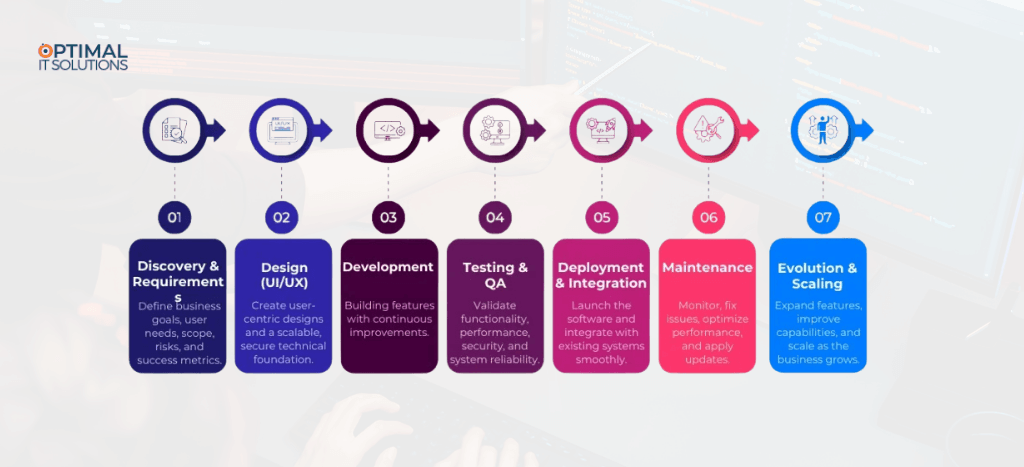
A full-service partner typically handles:
- Discovery and requirement analysis
- Architecture and system design
- Custom web development and front-end build
- Quality assurance and testing
- Post-launch maintenance and updates
- Performance monitoring and scaling
Common Mistakes Businesses Make When Hiring Developers
Many companies rush this decision. That creates problems later.
Choosing Based on Price Alone
Low cost feels tempting. Budgets matter. But the cheapest option often brings hidden costs. Poor planning causes rework. Weak code causes delays. Fixing mistakes costs more than doing things right once.
Ignoring Industry Experience
Every industry has rules. Healthcare differs from finance. Retail differs from logistics. A team without relevant experience may struggle to understand real needs.
Skipping Clear Requirements
Some businesses start without clear goals. They expect developers to figure everything out. That leads to confusion. Clear vision saves time.
Overlooking Communication Skills
Technical skill means little without communication. Updates matter. Feedback matters. Silence creates risk.
Hiring Without Checking Past Work
Portfolios show style and quality. References show reliability. Skipping this step invites surprises.
Turn Your Vision Into a Successful Digital Product
Partner with a team that understands your goals, delivers high-quality custom software, and stays committed beyond launch. Build with confidence knowing your project is backed by expertise, transparency, and long-term support.
Key Factors to Consider When Selecting a Software Development Partner
This part matters most. These factors guide smart decisions.
Understanding of Your Business Goals
- A good partner listens first. They ask why before asking how.
- They connect features to outcomes. They care about results.
Technical Expertise
- Technology changes fast. Your partner should stay current.
- Ask about tools. Ask about frameworks. Ask about security.
- Confidence comes from knowledge.
Project Management Approach
- Strong teams follow clear processes. They set milestones. They track progress.
- You should know what happens next at all times.
Communication Style
- Updates should feel natural. Meetings should feel useful.
- Clear language matters more than fancy terms.
Scalability Planning
- Your business will grow. Your software should handle that growth.
- Planning for scale early avoids pain later.
Freelancers vs Development Agencies
Some businesses hire freelancers. Others choose agencies. Both paths work depending on needs. Freelancers offer flexibility. Agencies offer structure. Agencies provide teams. Designers, testers, and managers work together. Freelancers suit smaller projects. Agencies suit complex systems. Choose based on scope, not trend.
| Freelancer | Development Agency |
Best for | Small, focused projects | Complex, multi-phase systems |
Team structure | Individual | Cross-functional team |
Flexibility | High | Structured |
Accountability | Limited | Defined processes |
Post-launch support | Variable | Typically included |
What Makes the Best Software Development Agency Stand Out
They test thoroughly. They document clearly. They explain choices. They admit limits. They respect deadlines. They do not disappear after launch. Look for consistency across projects. That signals maturity.
A strong custom web design agency, for example, does not just build what looks good they build what performs and converts. The same principle applies across all digital work, from custom ecommerce development to internal business platforms.
💡 At Optimal IT Solutions, this is the standard we hold ourselves to on every project quality, clarity, and long-term involvement.
How to Evaluate a Software Development Partner
Evaluation needs structure. Start with a discovery call. Notice how they listen. Review case studies. Look for challenges similar to yours. Ask how they handle changes. Change always happens. Ask about post-launch support. Trust builds through transparency.
Evaluation checklist:
- Do they ask about your goals before pitching solutions?
- Can they show relevant case studies or past work?
- Do they explain their process clearly?
- How do they handle scope changes?
- What does post-launch support look like?
- Are communication expectations clearly defined?
The Role of Culture Fit in Long-Term Projects
- Culture matters more than people think.
- Shared values reduce friction. Respect improves collaboration.
- Time zones matter too. Availability affects speed.
- A smooth relationship improves outcomes.
Contracts and Ownership Rights
- Always clarify ownership. You should own the final product.
- Define payment terms. Define delivery stages.
- Clear contracts protect both sides.
- Never skip legal clarity.
Red Flags to Watch For
- Some warning signs appear early.
- Promises without analysis raise concern.
- Unclear pricing creates risk.
- Poor response times signal future problems.
- Trust your instincts.
How Long It Takes to Build Custom Software
Timelines depend on complexity. Simple tools take weeks. Larger systems take months. Good partners set realistic expectations. Rushed software often fails, so calmly handle your project.
Building a Long-Term Partnership
Software evolves. Markets change. A strong software development partner grows with you. They learn your system. That knowledge saves time later. Long-term partnerships reduce costs over time.
Ready to Build with the Right Software Development Partner?
Choosing the right custom software development partner is the first step toward building a reliable, scalable, and successful digital product. Let’s turn your vision into a solution that drives growth with expert guidance and a team you can trust.
Final Thoughts
Choosing a custom software development partner shapes your product future and affects quality trust and growth. This decision influences timelines budgets and long term success. Taking time to ask the right questions helps you avoid costly mistakes. Looking beyond price allows you to find real value. The right partner builds more than software and supports your business with confidence and clarity.
FAQ's
A custom software development partner is a team or agency that works closely with your business to design, build, test, and maintain software built specifically for your needs rather than adapting off-the-shelf tools.
Evaluate their technical expertise, past work, communication style, project management process, and post-launch support. Do not choose on price alone.
Timelines vary. Simple tools may take 4–8 weeks. Complex systems can take 6–12 months or more. A good partner sets realistic expectations from the start.
.
Freelancers work independently and suit smaller projects. Agencies offer structured teams including developers, designers, testers, and project managers better suited for complex or long-term builds.
Look for one that combines technical skill with UX thinking, communicates clearly, shows relevant past work, and stays involved after launch.
Let's Connect With Our Experts
Get valuable consultation form our professionals to discuss your projects. We are here to help you with all of your queries.
Revolutionize Your Business
Collaborate with us and become a trendsetter through our innovative approach.