Digital Marketing Services for US Businesses | The Ultimate 2026 Growth Guide

Featured Posts
Key Takeaways
- Digital marketing services help US businesses attract, engage, and convert customers through channels like SEO, PPC, social media, email, and paid advertising
- In 2026, AI-powered search (Google AI Overviews, ChatGPT, Perplexity) is reshaping how customers discover businesses traditional SEO alone is no longer enough
- A multi-channel strategy consistently outperforms single-channel approaches businesses combining SEO, content, and paid media see the strongest long-term growth
- PPC delivers immediate traffic; SEO delivers compounding long-term value smart businesses invest in both simultaneously
- Email marketing remains one of the highest-ROI digital channels available, making list building a critical asset for every US business
- Local SEO is non-negotiable for any business serving a specific US city or region Google Maps visibility directly drives foot traffic and calls
- Data-driven marketing built on clear KPIs, analytics, and systematic testing consistently outperforms campaigns built on guesswork
- Avoiding common mistakes (chasing vanity metrics, skipping mobile optimization, neglecting existing customers) is just as important as executing the right tactics
- Choosing the right digital marketing agency one with proven results, US market expertise, and full transparency is the single most leveraged decision a business owner can make
.
💡 Overview: Digital marketing services are professional solutions that help businesses attract, engage, and convert customers online through channels like search engines, social media, email, and paid advertising. For US businesses in 2026, these services are no longer optional they are the primary driver of sustainable growth, brand visibility, and competitive advantage in an increasingly digital-first economy.
If you run a business in the United States today, whether it’s a neighborhood law firm in Dallas, a fast-scaling SaaS startup in Austin, or a mid-sized e-commerce brand in Chicago, you already know that the old playbook no longer works. Cold calls go unanswered. Print ads get ignored. And word-of-mouth alone won’t move the needle the way it once did.
What does work? A smart, integrated digital marketing strategy built around how your customers actually search, scroll, and shop in 2026.
This guide breaks down every major digital marketing service available to US businesses, explains what each one does and why it matters, and shows you exactly how to build a strategy that drives real, measurable growth. Whether you’re starting from scratch or looking to sharpen an existing approach, you’ll find actionable insights on every page.
What Are Digital Marketing Services?
💡 Definition: Digital marketing services are strategies, tools, and campaigns delivered by marketing professionals or agencies to promote a business, product, or service through online channels including search engines, social platforms, email, websites, and paid media.
Think of digital marketing as the modern sales funnel, except instead of a salesperson knocking on doors, your brand shows up precisely where your ideal customers are already spending their time: Google search results, Instagram feeds, YouTube videos, email inboxes, and beyond.
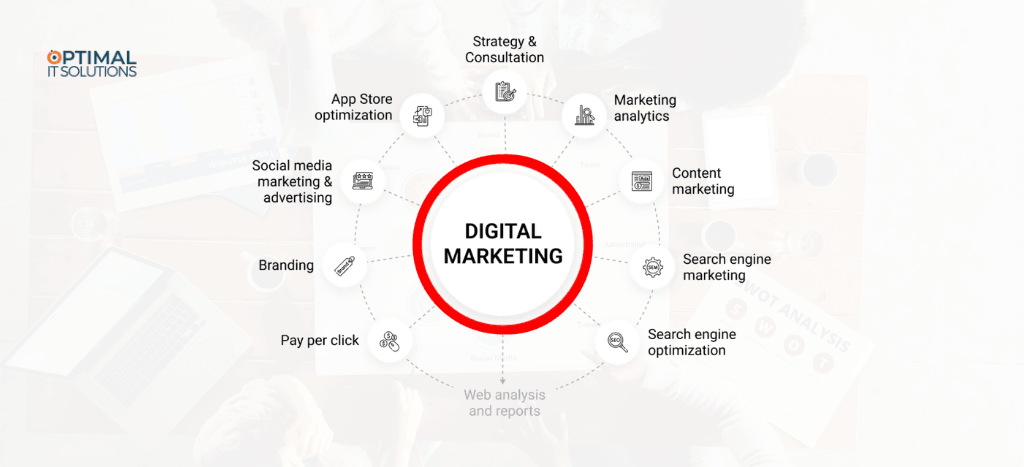
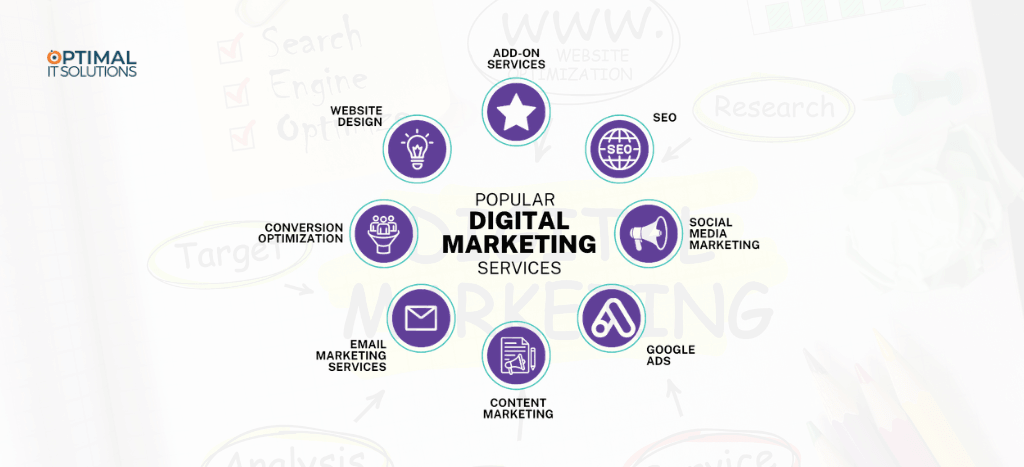
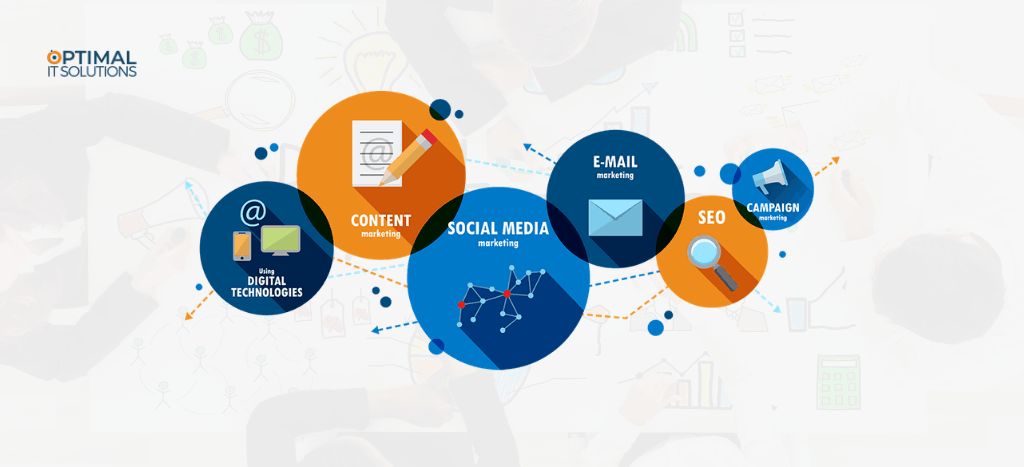
These services encompass a wide range of disciplines that work individually or in combination:
- Search Engine Optimization (SEO): Earning organic visibility on Google and Bing
- Pay-Per-Click Advertising (PPC): Running paid ads on search and social platforms
- Content Marketing: Creating valuable blog posts, videos, guides, and more
- Social Media Marketing: Building brand presence and community on platforms like LinkedIn, Instagram, and Facebook
- Email Marketing: Nurturing leads and retaining customers through direct inbox communication
- Local SEO: Helping brick-and-mortar businesses rank in local search results
- Conversion Rate Optimization (CRO): turns more website visitors into paying customers.
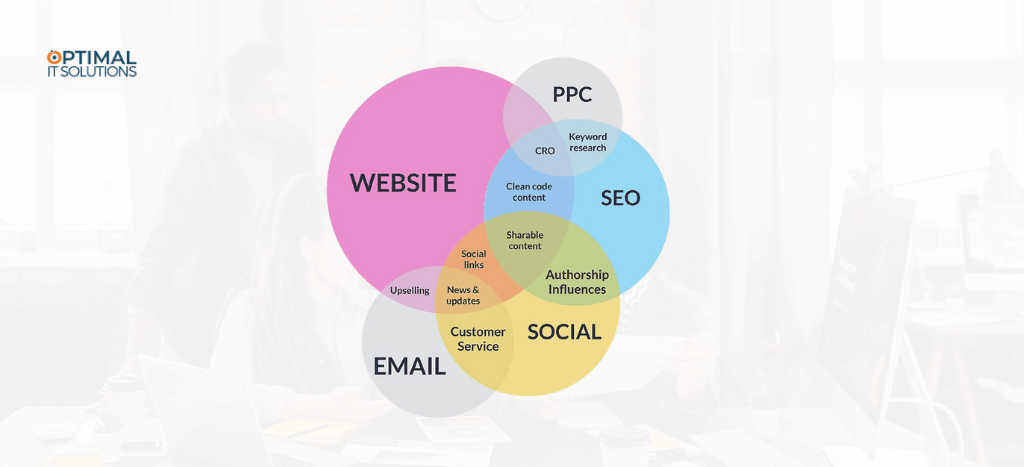
Each of these services can be deployed independently, but the businesses seeing the greatest results in 2026 are the ones combining them into a unified, data-driven growth engine.
Why Digital Marketing Matters in 2026
The numbers tell a clear story. According to industry research, US digital advertising spend continues to outpace all other media categories. Consumers now begin the vast majority of purchase journeys online, whether they’re searching for a local plumber, comparing enterprise software platforms, or evaluating healthcare providers.
Several key shifts are reshaping how businesses need to approach digital marketing right now:
💡 The US digital advertising market has grown significantly over the past decade. Consumer behavior has fundamentally shifted online, AI is reshaping search results, and businesses without a digital presence risk becoming invisible. In 2026, digital marketing is not a growth option it is the growth channel.
AI-Powered Search Is Changing Everything
Google’s AI Overviews now appear at the top of many search results, providing direct answers before users even click a link. This means businesses need to optimize not just for rankings, but for being cited by AI systems. The same applies to ChatGPT, Perplexity, and other AI search tools that millions of Americans use daily to find products, services, and information.
💡 Pro Tip: Treat your generative AI integration roadmap and your AI search visibility strategy as one project, not two. The same content discipline that makes your internal AI tools effective clean data, clear structure, factual accuracy is exactly what makes your public content easy for AI engines to find and cite.
Mobile Is the Primary Device
More than 60% of web traffic in the US now comes from mobile devices. If your website, ads, and content aren’t built for mobile-first experiences, you’re losing customers before they even see your offer.
Consumer Trust Is Earned Online
Reviews, social proof, content quality, and brand authority are all established digitally before most customers ever speak to a sales representative. Businesses that invest in building a credible online presence convert at significantly higher rates than those that don’t.
Competition Has Never Been Steeper
Regardless of your industry or market size, your competitors are investing in digital marketing. The question isn’t whether you need it, it’s whether you can afford to let them outrank you, outspend you, and out-engage your shared audience.
Core Types of Digital Marketing Services
Ready to Grow Your Business Online? Let's Build Your Strategy.
Most US businesses are leaving serious revenue on the table simply because their digital marketing isn’t working hard enough. At Optimal IT Solutions, we build data-driven strategies tailored to your goals, your market, and your customers not generic playbooks. Whether you’re starting from scratch or scaling what’s already working, we’re ready to help.
1. Search Engine Optimization (SEO)
SEO is the process of optimizing your website and online content so that it ranks higher in search engine results particularly Google for the keywords and questions your target customers are searching.
SEO is the foundation of long term digital growth. Unlike paid ads, the traffic generated by SEO doesn’t stop when your budget runs out. A well optimized page can rank and drive leads for months or years.
Modern SEO in 2026 goes well beyond stuffing keywords into web pages. It encompasses:
- Technical SEO: site speed, Core Web Vitals, mobile optimization, structured data, and crawlability
- On-Page SEO: content quality, keyword intent alignment, meta tags, headings, and internal linking
- Off-Page SEO: building authoritative backlinks from reputable sites
- Entity-Based SEO: establishing your brand as a recognized entity in your niche
- AI & GEO Optimization: structuring content to be cited by AI-powered search tools
- Local SEO: optimizing for ‘near me’ and location-specific searches
💡 Expert Insight: Google processes an estimated 8.5 billion searches per day. The businesses that appear on page one capture the overwhelming majority of clicks. If you’re not investing in SEO, you’re effectively handing potential customers to your competitors.
2. Pay-Per-Click Advertising (PPC)
PPC is a paid digital advertising model where businesses pay each time a user clicks on their ad. The most common platforms are Google Ads, Microsoft Ads (Bing), and Meta Ads (Facebook/Instagram).
PPC is the fastest route to visibility. While SEO takes time to build momentum, a well-structured PPC campaign can start delivering leads and sales within days of launch.
Effective PPC management includes:
- Google Search Ads: Appearing at the top of results for high-intent keywords
- Google Display Network: Visual banner ads across millions of websites
- Meta Ads (Facebook & Instagram): Targeting audiences based on demographics, interests, and behavior
- Retargeting / Remarketing: Recapturing users who visited your site but didn’t convert
- Shopping Ads: Product-based ads for e-commerce businesses
- YouTube Ads: Video advertising to capture attention at scale
Google Search Ads | High-intent buyers | $1–$10+ | Purchase-ready traffic |
Meta Ads | Brand awareness & retargeting | $0.50–$3 | Audience targeting |
LinkedIn Ads | B2B lead generation | $5–$20+ | Professional targeting |
Microsoft/Bing Ads | Mature audiences, lower competition | $1–$7 | Cost efficiency |
YouTube Ads | Brand storytelling | $0.10–$0.30 per view | Visual impact |
3. Content Marketing
Content marketing is the strategic creation and distribution of valuable, relevant content blog posts, guides, videos, infographics, case studies, and more to attract and retain a clearly defined audience and drive profitable customer action.
Content is the fuel that powers every other digital marketing channel. Great content improves your SEO rankings, gives your social media accounts something worth sharing, nurtures email subscribers, and builds the trust that converts strangers into customers.
A content marketing strategy for US businesses in 2026 should include:
- Pillar content: Comprehensive, authoritative guides that establish topical authority
- Blog posts: Regular, keyword-optimized articles targeting specific search queries
- Video content: Tutorials, explainers, and case studies optimized for YouTube and social platforms
- Case studies and success stories: Real-world proof that your product or service delivers results
- Infographics and visual content: Shareable formats that simplify complex information
- AI-friendly formatting: Structured content that AI tools can easily extract and cite
4. Social Media Marketing
Social media marketing involves creating and publishing content across social platforms to build brand awareness, engage your audience, drive website traffic, and generate leads or sales.
With over 300 million Americans on social media, these platforms aren’t optional extras they’re central to how modern consumers discover, evaluate, and connect with brands.
The right platforms depend on your audience and industry:
Platform | Primary Audience | Best Use Case | Content Type |
Adults 25–65+ | Community building, local ads | Posts, video, events | |
18–44 year olds | Visual brand storytelling | Reels, Stories, carousels | |
B2B professionals | Thought leadership, B2B leads | Articles, posts, LinkedIn Ads | |
TikTok | 18–35 year olds | Viral awareness, younger audiences | Short-form video |
YouTube | All ages | Education, tutorials, brand content | Long & short-form video |
X (Twitter) | News-savvy users | Brand voice, trending conversations | Short posts, threads |
5. Email Marketing
Email marketing is the practice of sending targeted, personalized messages directly to subscribers’ inboxes for lead nurturing, customer retention, promotions, and relationship building
Email marketing consistently delivers one of the highest returns on investment of any digital channel. For every dollar spent on email marketing, businesses can expect significant returns, making it an essential tool in any growth strategy.
Effective email marketing in 2026 goes beyond blasting promotional offers. It includes:
- Welcome sequences: Onboarding new subscribers and setting expectations
- Lead nurture campaigns: Guiding prospects through the decision-making process
- Behavioral triggers: Automated emails sent based on specific user actions
- Segmentation: Delivering relevant content to distinct audience segments
- Re-engagement campaigns: Winning back inactive subscribers
- Post-purchase follow-ups: Building loyalty and encouraging repeat business
6. Local SEO
Local SEO optimizes a business’s online presence to attract customers from specific geographic areas especially through Google Maps, Google Business Profile, and location-based search results.
For US businesses with a physical location or those serving specific cities and regions, local SEO is among the most impactful investments available. When someone in your city searches for ‘best accountant near me’, local SEO determines whether your business appears at the top.
Core local SEO tactics include:
- Google Business Profile optimization: Complete, accurate, and actively managed.
- Local citations: Consistent NAP (Name, Address, Phone) across directories
- Location-specific landing pages: Content optimized for city and region keywords
- Review generation and management: Actively encouraging and responding to customer reviews
- Local link building: Earning mentions from local news sites, chambers of commerce, and community organizations
7. Conversion Rate Optimization (CRO)
CRO is the process of increasing the percentage of website visitors who take a desired action filling out a form, making a purchase, booking a call through systematic testing and optimization.
Driving traffic to your website is only half the equation. CRO ensures that traffic actually converts. Even a modest improvement in conversion rate from 2% to 3%, for example, can have a dramatic impact on revenue without spending an extra dollar on advertising.
CRO involves:
- A/B testing: Comparing different versions of pages, headlines, and CTAs
- Heatmaps and session recordings: Understanding how users actually interact with your site
- Landing page optimization: Designing pages that are built to convert
- UX improvements: Removing friction from the customer journey
- Form optimization: Reducing drop-offs on lead capture forms
Stop Losing Customers to Competitors Who Rank Higher.
Every day you’re not visible online, your competitors are winning customers that should be yours. Let’s fix that.
Benefits of Digital Marketing for US Businesses
Digital marketing levels the playing field, giving small and mid-sized US businesses the ability to compete with larger enterprises through targeted, measurable, and cost-effective campaigns. The benefits extend far beyond traffic they include brand authority, customer loyalty, and sustainable revenue growth.
Here’s what businesses across the US consistently report when they invest in a well-executed digital marketing strategy:
1. Measurable Results and Accountability
Every digital marketing channel produces trackable data. You can see exactly how many people saw your ad, clicked your email, visited your page, and ultimately bought your product. This level of transparency doesn’t exist with traditional marketing.
2. Highly Targeted Audience Reach
Digital platforms allow you to target customers by age, location, income, interests, search behavior, past purchase history, and much more. Instead of broadcasting to a general audience, you’re connecting with the specific people most likely to buy.
3. Cost-Effective at Every Budget Level
Unlike TV or print advertising, which require large upfront commitments, digital marketing can scale to fit virtually any budget. A local restaurant can run effective Facebook Ads for $300 per month. A national brand might allocate $300,000. Both can see strong returns proportional to their investment.
4. Compounding Long-Term Value
SEO content, email lists, and brand authority compound over time. A blog post written today can continue driving leads for years. An email list built this quarter becomes a recurring revenue engine for the next decade.
5. Competitive Intelligence
Digital tools make it possible to monitor your competitors’ strategies, identify gaps in the market, and capitalize on opportunities they’re missing. This level of strategic insight was previously available only to large enterprises with deep research budgets.
5. Competitive Intelligence
Digital tools make it possible to monitor your competitors’ strategies, identify gaps in the market, and capitalize on opportunities they’re missing. This level of strategic insight was previously available only to large enterprises with deep research budgets.
How to Choose the Right Digital Marketing Agency
Not all digital marketing agencies are created equal. The right partner understands your industry, your goals, and your customers and can show you clear evidence of results they’ve delivered for businesses like yours.
Choosing a digital marketing agency is one of the most important decisions a US business owner or marketing manager will make. Here’s a practical framework for evaluating your options:
Not all digital marketing agencies are created equal. The right partner understands your industry, your goals, and your customers and can show you clear evidence of results they’ve delivered for businesses like yours.
Choosing a digital marketing agency is one of the most important decisions a US business owner or marketing manager will make. Here’s a practical framework for evaluating your options:
Evaluation Criteria | What to Look For | Red Flags |
Proven Track Record | Case studies with real metrics and client names | Vague success claims with no data |
Industry Experience | Experience in your sector or adjacent markets | Generic ‘we work with everyone’ positioning |
Transparency | Clear reporting, open access to your accounts | Reluctance to share campaign data |
Strategy First | Custom strategy built around your goals | Cookie-cutter packages with no discovery process |
Communication | Dedicated contact, regular check-ins, clear SLAs | Slow responses, unclear ownership |
Full-Service Capability | Expertise across SEO, PPC, content, and social | One-trick agencies pushing a single channel |
US Market Knowledge | Understanding of American consumer behavior and platforms | Offshore teams with limited US market context |
Beyond the table above, ask any agency you’re considering these questions:
- Can you walk me through a campaign you ran for a business similar to mine?
- What does the onboarding process look like, and how long until we see results?
- How do you report on campaign performance, and how often?
- Who specifically will be working on my account, and what are their backgrounds?
- What happens if results fall below expectations? How do we course-correct?
More Traffic. More Leads. More Revenue. Let's Make It Happen.
One free strategy call could change the trajectory of your business. No pressure, no fluff just a clear plan to grow.
Common Digital Marketing Mistakes US Businesses Make
Even well-intentioned digital marketing efforts can backfire when businesses make avoidable strategic or execution errors. Understanding the most common pitfalls can save you significant time, money, and frustration.
1. Treating Digital Marketing as a One-Time Project
Digital marketing is an ongoing investment, not a one-time campaign. Businesses that build a website and expect organic traffic without ongoing SEO, content, or promotion are almost always disappointed.
2. Choosing Tactics Before Strategy
‘We need to be on TikTok’ or ‘we should run Google Ads’ are not strategies. Starting with tactics before defining your target audience, goals, and key messages leads to fragmented, ineffective campaigns.
3. Ignoring Analytics
Running campaigns without tracking performance is like driving with your eyes closed. Google Analytics 4, platform-native dashboards, and CRM integrations exist for a reason. Use them and act on what you find.
4. Prioritizing Vanity Metrics
High follower counts and impressive impression numbers feel good, but don’t pay the bills. Focus on metrics that map to business outcomes: leads, conversions, cost per acquisition, and revenue attributed to marketing.
5. Neglecting the Existing Customer Base
Most businesses spend 80% of their marketing budget acquiring new customers and almost nothing retaining existing ones, despite the fact that selling to an existing customer is significantly easier and cheaper than winning a new one. Email marketing and loyalty programs are your retention tools.
6. Inconsistent Brand Voice and Messaging
When your website says one thing, your social media another, and your ads a third, customers lose confidence. Consistency builds trust. Develop clear brand guidelines and apply them across every channel.
7. Not Optimizing for Mobile
If your website loads slowly on a smartphone or your landing pages aren’t mobile-friendly, you’re losing a majority of potential customers before they read a single word.
Future Trends in Digital Marketing for 2026 and Beyond
Digital marketing is evolving rapidly. Artificial intelligence, voice search, privacy-first advertising, and personalization at scale are reshaping how businesses reach and retain customers. Staying ahead of these trends is not optional it’s a competitive necessity.
1. Generative Engine Optimization (GEO)
As AI tools like ChatGPT, Perplexity, and Google’s AI Overviews become primary information sources for millions of Americans, businesses need to optimize their content to be cited and featured by these systems. GEO is the next evolution of SEO.
2. AI-Powered Personalization
Machine learning now makes it possible to deliver hyper-personalized marketing messages at scale, adjusting content, offers, and timing based on individual user behavior in real time. Businesses that leverage AI personalization will significantly outperform those relying on one-size-fits-all campaigns.
3. Short-Form Video Dominance
TikTok, Instagram Reels, and YouTube Shorts have permanently changed content consumption habits. Short, engaging video content is now one of the most effective ways to reach both new and existing audiences, regardless of industry.
4. Privacy-First Marketing
With the deprecation of third-party cookies and increasing consumer privacy expectations, businesses are shifting toward first-party data strategies, building owned audiences through email lists, loyalty programs, and direct relationships rather than relying on rented platform audiences.
5. Voice Search and Conversational Queries
Smart speakers and voice assistants continue to grow in US households. Optimizing for conversational, question-based queries, the kind people speak rather than type, is becoming an important dimension of SEO strategy.
6. Hyper-Local Marketing
GPS-based targeting, proximity marketing, and local content strategies are becoming more sophisticated. For businesses with physical locations, hyper-local digital campaigns deliver some of the most cost-effective results available.
Your Next Customer Is Searching for You Right Now.
The only question is will they find you or your competitor? Let’s make sure it’s you.
Why US Businesses Need a Data-Driven Marketing Strategy
Data-driven marketing replaces guesswork with evidence. By building campaigns around customer behavior, analytics, and performance data, US businesses can allocate budget more efficiently, reduce wasted spend, and achieve more predictable growth.
The companies consistently outperforming their competitors in 2026 share one thing in common: they make marketing decisions based on data, not assumptions.
A data-driven digital marketing strategy means:
- Setting clear, measurable KPIs before any campaign launches, whether that’s cost per lead, website conversion rate, email open rates, or revenue per channel
- Building a measurement infrastructure, GA4, CRM integration, pixel tracking, and UTM parameters that capture accurate data at every touchpoint
- Running regular performance reviews, weekly or monthly analysis of what’s working, what isn’t, and why
- Testing systematically, A/B testing ad copy, landing page design, email subject lines, and CTAs rather than making changes based on instinct.
- Attribution modeling understanding which channels and touchpoints are truly driving conversions, not just which ones appear in the last click
- Iterating based on evidence, making incremental improvements guided by data, compounding results over time
How Optimal IT Solutions Helps US Businesses Grow
Optimal IT Solutions is a full-service digital marketing agency built to help US businesses from startups to established enterprises build visibility, generate leads, and scale revenue through integrated, data-driven marketing strategies.
At Optimal IT Solutions, we don’t believe in generic packages or one-size-fits-all approaches. Every business we work with has a unique audience, a different competitive landscape, and distinct growth goals. Our role is to understand all of that deeply, then build and execute a digital marketing strategy tailored specifically to your situation.
What We Offer
- SEO Services: Technical audits, on-page optimization, content strategy, link building, and AI-search optimization to grow your organic visibility
- PPC Management: Google Ads, Meta Ads, and multi-platform campaigns built for efficiency and ROI
- Content Marketing: Pillar content, blog strategy, video scripts, and lead magnets that build authority and drive traffic
- Social Media Marketing: Channel strategy, content creation, community management, and paid social campaigns
- Email Marketing: List building, automation sequences, segmentation, and campaign management
- Local SEO: Google Business Profile optimization, citation building, and location-specific content for US businesses serving local markets
- Conversion Rate Optimization: Landing page testing, UX improvements, and funnel optimization to maximize the value of your existing traffic
- Digital Marketing Strategy: End-to-end strategy development, competitive analysis, and quarterly roadmap planning
What Would 3X More Leads Do for Your Business?
Let’s find out together. Book your free strategy call and we’ll show you exactly where your biggest growth opportunities are hiding.
Conclusion
Digital marketing is no longer something US businesses dabble in; it’s the central engine of sustainable growth for companies of every size, in every industry, across every market.
The businesses that will thrive through 2026 and beyond are the ones that build strong organic search visibility, invest in paid channels strategically, create content that earns trust, and use data to make smarter decisions over time. They’re the ones that treat digital marketing not as a line item to minimize, but as a growth investment to optimize.
Whether you’re just beginning to build your digital presence or looking to significantly accelerate what you’ve already built, the path forward starts with strategy, knowing who you’re trying to reach, what you’re trying to say, and which channels will deliver the best results for your specific business.
FAQ's
Digital marketing services are professional strategies and campaigns that help businesses promote themselves online through channels like search engines, social media, email, and paid advertising. They include SEO, PPC, content marketing, social media management, email marketing, and more.
Costs vary widely based on the scope and channels involved. A basic SEO and content package for a small business might start around $1,000–$2,500 per month. Comprehensive, multi-channel strategies for mid-sized businesses typically range from $5,000 to $20,000 or more per month. PPC budgets are separate from management fees.
It depends on the channel. PPC can generate leads within days. SEO typically takes 3–6 months to show meaningful organic growth. Content marketing builds momentum over 6–12 months. Email marketing results depend on list quality and campaign frequency, but can be seen relatively quickly.
SEO (Search Engine Optimization) focuses on earning organic, unpaid traffic by ranking higher in search results. It takes longer to build but delivers compounding long-term value. PPC (Pay-Per-Click) delivers immediate visibility through paid ads but traffic stops when your budget runs out. Most businesses benefit from investing in both.
Yes, particularly LinkedIn, which is the leading B2B social platform in the US. B2B companies can also benefit from YouTube for educational content and Facebook for retargeting. The key is choosing platforms where your specific professional audience is active and engaged.
Local SEO optimizes your business to appear in location-based searches and Google Maps results. If your business serves a specific geographic area whether a physical storefront, service area business, or regional company local SEO is essential. It’s one of the highest-converting forms of digital marketing for locally focused businesses.
A digital marketing strategy is a comprehensive plan that defines your target audience, marketing goals, chosen channels, content approach, budget allocation, and key performance indicators (KPIs). It provides the roadmap for all marketing activities and ensures every tactic serves a clear business objective.
Absolutely. Digital marketing is one of the few areas where smart strategy can outperform big budgets. Small businesses can dominate niche keywords, build loyal local audiences, and out-engage large corporations through authentic content and community management. The key is focus rather than competing everywhere, win in the specific areas where your audience is most active.
Content marketing is the creation of valuable, relevant content blog posts, guides, videos, infographics designed to attract and build trust with your target audience. It matters because it underpins every other marketing channel: good content improves SEO rankings, fuels social media, powers email campaigns, and builds the brand authority that drives conversions.
Success is measured against the KPIs defined at the start of each campaign. Common metrics include organic traffic growth, keyword rankings, conversion rates, cost per lead (CPL), return on ad spend (ROAS), email open and click-through rates, and overall revenue attributed to marketing. Platforms like Google Analytics 4 and your CRM are essential measurement tools.
or, est. Ea, consequatur.
Let's Connect With Our Experts
Get valuable consultation form our professionals to discuss your projects. We are here to help you with all of your queries.
Revolutionize Your Business
Collaborate with us and become a trendsetter through our innovative approach.